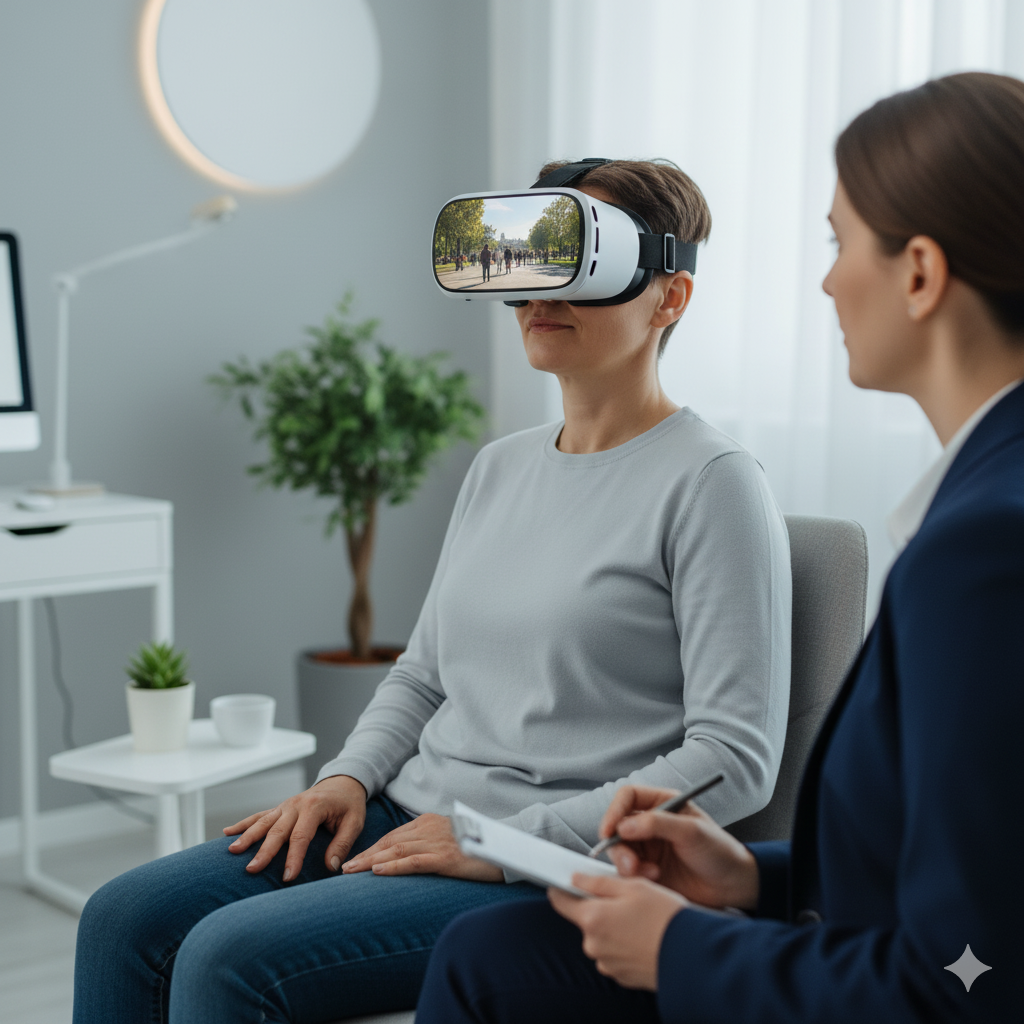
Generalised Anxiety Disorder (GAD), Obsessive Compulsive Disorder (OCD), Post-traumatic Stress Disorder (PTSD) and Agrophobia
The treatment has evolved from basic sedatives to more targeted and holistic approaches.
Early treatments (pre-1980s): Relied on benzodiazepines (e.g., diazepam) for rapid symptom relief, but concerns about dependence limited long-term use.
1980s–1990s: SSRIs (e.g., escitalopram, paroxetine) and SNRIs (e.g., venlafaxine, duloxetine) became first-line therapies due to better safety profiles.
2000s onwards: Cognitive behavioural therapy (CBT) and other psychological therapies gained prominence, often combined with medication.
Recent advances: Mindfulness-based therapies, digital CBT apps, and psychedelics such as ketamine, neuromodulation techniques, and virtual reality (VR) based therapy are shaping the future.
-
The following technologies have been appraised by NICE:
iCT‑PTSD (OxCADAT) for post-traumatic stress disorder (PTSD)
iCT‑SAD (OxCADAT) for social anxiety disorder
Space from Anxiety (SilverCloud) for generalised anxiety symptoms or unspecified anxiety disorder
gameChangeVR for severe agoraphobic avoidance in people with psychosis
-
A phase 3 UK clinical trial is evaluating MM120 (LSD D-tartrate), a psychedelic compound, to determine its effectiveness and safety in treating adults with generalised anxiety disorder (GAD).
Depression
The treatment of depression has evolved from broad, sedative approaches to targeted and personalised therapies:
Early treatments (pre-1950s): Relied on electroconvulsive therapy (ECT), sedatives, and institutional care.
1950s–1970s: Introduction of tricyclic antidepressants (TCAs) and monoamine oxidase inhibitors (MAOIs), improving symptom control but with significant side effects.
1980s–1990s: Selective serotonin reuptake inhibitors (SSRIs) like fluoxetine and serotonin-norepinephrine reuptake inhibitors (SNRIs) became first-line due to better safety and tolerability.
2000s onwards: Growth of psychological therapies such as CBT, mindfulness-based interventions, and combined treatment models.
Recent advances: Ketamine and esketamine, transcranial magnetic stimulation (TMS), deep brain stimulation (DBS), digital therapeutics, and research into psychedelic-assisted therapy (psilocybin) are shaping next-generation care.
-
NICE has appraised Space from Depression, a digital cognitive behavioural therapy (CBT) programme.
-
A phase 3 UK clinical trial is evaluating COMP360 (psilocybin), a psychedelic compound, to determine its effectiveness and safety in treating adults with treatment resistant depression.
Psychosis
The treatment of psychosis has evolved from institutional care to modern, personalised approaches:
1950s: Introduction of the first antipsychotics (e.g., chlorpromazine) revolutionised treatment by reducing hallucinations and delusions.
1970s–1990s: Development of second-generation (atypical) antipsychotics (e.g., clozapine, risperidone, olanzapine) improved side effect profiles and patient outcomes.
2000s onwards: Greater focus on early intervention, psychological therapies (CBT for psychosis), and community-based care to improve recovery and quality of life.
Recent advances: Exploration of digital therapeutics, neuromodulation techniques, and personalised, biomarker-driven approaches to optimise treatment.
-
The following technologies have been appraised by NICE:
AVATAR Therapy for managing auditory verbal hallucinations (hearing voices)
SlowMo for managing distressing thoughts or paranoia
CareLoop for monitoring symptoms of psychosis to prevent relapse.